


Answering All Your Questions About Electric Cars
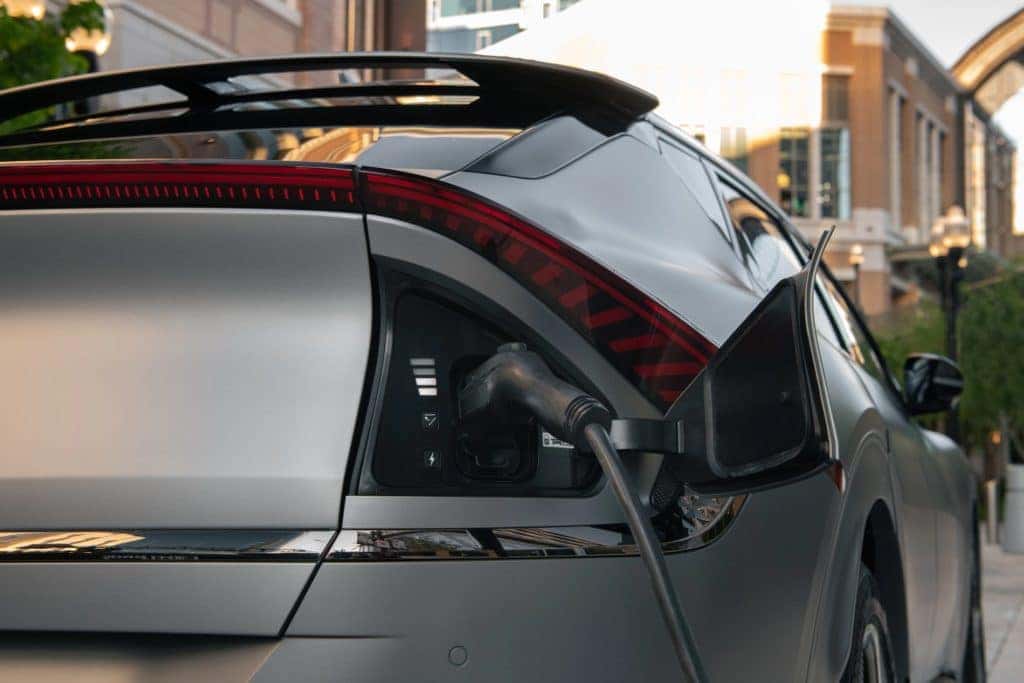
Just a few years ago, electric vehicles were few and far between in Arkansas. Now, it’s normal to see EV charging stations all across the South as leading vehicle manufacturers race to keep up with demand for plug-in vehicles. In February of 2021, Kia Motors announced its plan to expand its electric lineup and introduced the first-ever dedicated EV: the EV6. If you’re interested in making the switch to an electric vehicle, you’ve probably got plenty of questions. Below, we’ve answered some of the most common questions about owning an electric vehicle!
Browse our inventory of electric cars
Q: Can I charge my electric car at home?
A: Yes. You can charge your EV using a standard 110-volt outlet (Level 1 Charging), however, it’ll take longer. Most EV owners have a 240-volt outlet (Level 2 Charging) installed in their garage. Level 2 Charging adds about 25 miles of ranger per hour of charging.
Q: How much does it cost to charge an electric car at home?
A: The cost of charging your EV at home depends on the price of electricity in your area. The average price of electricity in Little Rock, Arkansas is 9.65 cents per kilowatt-hour. The 2021 Kia Niro EV has a 64-kWh battery that would cost $6.18 to charge fully in an average Little Rock home with a 120-volt outlet.
Q: Can I go on a road trip in an electric car?
A: Yes, but it depends on where you are traveling. Before you leave, make sure to research public charging stations that are offered along your route. You should also consider the range of your electric vehicle and it’s charging speed. The new 2022 Kia EV6 can charge at a Level 3 rapid charger. This charging can add 70 miles of range in just 5 minutes. To find public charging locations, visit www.plugshare.com.
Q: How much does a public charging station cost?
A: Some public EV charging stations are free! The price of charging stations depends on the cost of electricity in the area, the time of day, and other factors. On average, public stations charge between $0.11- $0.15 cents per kilowatt-hour.
Q: Can I get an EV tax credit?
A: The Federal Government offers a tax credit to buyers of new electric vehicles. This tax credit is dependent on the capacity of the vehicle’s battery pack, measured in kilowatt-hours, and can provide owners with as much as $7,500 in tax credits.
Q: Should I buy or lease an EV?
A: The choice to buy or lease an electric vehicle depends on multiple factors. Leased vehicles have mileage caps, so if you plan to drive a lot, you should probably purchase your vehicle. But if you’re someone who is always ready for the next trend, you may like leasing! If you’re unsure, we can help you determine which option is best for you and your driving habits as well as your budget.
Q: Are electric vehicles difficult to maintain?
A: Overall, EVs are much easier to maintain than gas-powered vehicles. Electric vehicles have no fluids to change, and their battery and motor have the potential to last much longer than the car itself. Additionally, their friction brakes last longer since regenerative braking assists with stopping the car.
Q: Are electric cars cheaper than gas?
A: Electric vehicles aren’t necessarily cheaper than gas-powered vehicles. However, it is much more affordable to power an EV than it is to fuel a gas-powered vehicle.
Q: Are electric vehicles the future?
A: According to the latest forecast by the investment bank UBS, 20% of global vehicle sales will be EVs by 2025. In 2030, they predict that 40% of sales will be EVs, and by 2040 virtually all vehicles sold will be electric.
Are you ready to make the jump to electric? If you’d like to learn more, visit us at Landers Kia to see our inventory of hybrid and electric vehicles. We’ll be happy to answer any questions you have about EVs!

0 comment(s) so far on Answering All Your Questions About Electric Cars